

Defensive Relativism : The Use of Cultural Relativism in International Legal Practice
Book Details
Format
Hardback
Book Series
Pennsylvania Studies in Human Rights
ISBN-10
1512823317
ISBN-13
9781512823318
Publisher
University of Pennsylvania Press
Imprint
University of Pennsylvania Press
Country of Manufacture
GB
Country of Publication
GB
Publication Date
Oct 25th, 2022
Print length
277 Pages
Weight
650 grams
Dimensions
15.80 x 23.70 x 2.60 cms
Product Classification:
International law
KSh 7,900.00
Currently unavailable
0 in stock
Delivery Location
Delivery fee: Select location
Secure
Quality
Fast
Defensive Relativism describes how governments around the world use cultural relativism in legal argument to oppose international human rights law. Defensive relativist arguments appear in international courts, at the committees established by human rights treaties, and at the United Nations Human Rights Council. The aim of defensive relativist arguments is to exempt a state from having to apply international human rights law, or to stop international human rights law evolving, because it would interfere with cultural traditions the state deems important. It is an everyday occurrence in international human rights law and defensive relativist arguments can be used by various types of states. The end goal of defensive relativism is to allow a state to appear human rights compliant while at the same time not implementing international human rights law. Drawing on a range of materials, such as state reports on the Convention on the Elimination of All Forms of Discrimination Against Women (CEDAW) and cases from the European Court of Human Rights involving freedom of religion, this book provides a definitive survey of defensive relativism. Crucially, Frederick Cowell argues, defensive relativism is not about alternative practices of human rights law, or debates about the origins or legitimacy of human rights as a concept. Defensive relativism is instead a variety of tactical argument used by states to justify ignoring international human rights law. Yet, as Cowell concludes, defensive relativism can't be removed from the law, as it is a reflection of unresolved tensions about the nature of what it means for rights to be universal.
Get Defensive Relativism by Frederick Cowell at the best price and quality guaranteed only at Werezi Africa's largest book ecommerce store. The book was published by University of Pennsylvania Press and it has 277 pages.
Customers Who Bought This Also Bought

Nuremberg''s Citizen Prosecutor
KSh 6,950.00
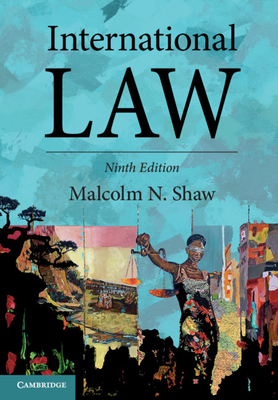
International Law
KSh 11,000.00

Come to This Court and Cry
KSh 2,000.00

Last Colony
KSh 1,800.00

Justice for Some
KSh 5,700.00

Digital Empires
KSh 5,050.00

Justice for Some
KSh 3,550.00

Vigilantes beyond Borders
KSh 5,050.00

The Brussels Effect
KSh 5,350.00

Vigilantes beyond Borders
KSh 17,100.00

The Brussels Effect
KSh 8,200.00

Apocalyptic Crimes – Why Nuclear Weapons Are Illegal and Must Be Abolished
KSh 10,800.00


