
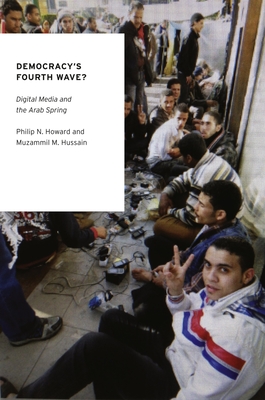
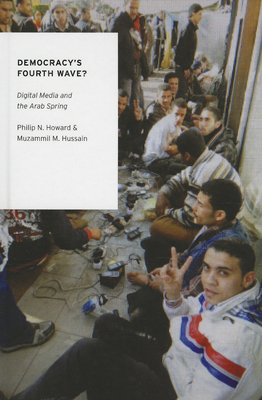
Democracy''s Fourth Wave? : Digital Media and the Arab Spring
Book Details
Format
Paperback / softback
Book Series
Oxford Studies in Digital Politics
ISBN-10
0199936978
ISBN-13
9780199936977
Publisher
Oxford University Press Inc
Imprint
Oxford University Press Inc
Country of Manufacture
GB
Country of Publication
GB
Publication Date
Apr 4th, 2013
Print length
160 Pages
Weight
248 grams
Dimensions
23.50 x 15.60 x 1.00 cms
KSh 6,950.00
Werezi Extended Catalogue
Delivery in 12 days
1 copies in stock
Delivery Location
Delivery fee: Select location
Delivery in 12 days
Secure
Quality
Fast
In 2011, the international community watched as citizens mobilized through the Internet and digital media to topple three of the world's most entrenched dictators: Ben Ali in Tunisia, Mubarak in Egypt, and Qaddafi in Libya. This book examines not only the unexpected evolution of events during the Arab Spring, but the longer history of desperate-and creative-digital activism through the Arab world.
In 2011, the international community watched as a shockingly unlikely community of citizens toppled three of the world''s most entrenched dictators: Ben Ali in Tunisia, Mubarak in Egypt, and Qaddafi in Libya. This movement of cascading democratization, commonly known as the Arab Spring, was planned and executed not by political parties, but by students, young entrepreneurs, and the rising urban middle class. International experts and the popular press have pointed to the near-identical reliance on digital media in all three movements, arguing that these authoritarian regimes were in essence defeated by the Internet. Is that true? Should Mubarak blame Twitter for his sudden fall from power? Did digital media "cause" the Arab Spring? In Democracy''s Fourth Wave?, Philip N. Howard and Muzammil M. Hussain examine the complex role of the Internet, mobile phones, and social networking applications in the Arab Spring. Examining digital media access, level of grievance, and levels of protest for popular democratization in 16 countries in the Middle East and North Africa, Howard and Hussain conclude that digital media was neither the most nor the least important cause of the Arab Spring. Instead, they illustrate a complex web of conjoined causal factors for social mobilization. The Arab revolts cascaded across countries largely because digital media allowed communities to realize shared grievances and nurtured transportable strategies for mobilizing against dictators. Individuals were inspired to protest for personal reasons, but through social media they acted collectively. Democracy''s Fourth Wave examines not only the unexpected evolution of events during the Arab Spring, but the longer history of desperate-and creative-digital activism through the Arab world.
Get Democracy''s Fourth Wave? by Muzammil M. Hussain, Philip N. Howard at the best price and quality guaranteed only at Werezi Africa's largest book ecommerce store. The book was published by Oxford University Press Inc and it has 160 pages.
Customers Who Bought This Also Bought

Cultish
KSh 2,350.00

How to Read the Bible for All Its Worth
KSh 3,250.00

The Art of Fighting
KSh 3,950.00

The Gutenberg Galaxy
KSh 6,000.00
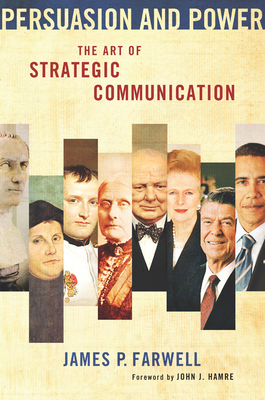
Persuasion and Power
KSh 4,850.00

Helping College Students Write
KSh 6,850.00
Persuasion in Society
KSh 17,100.00

Nonviolent Communication: A Language of Life
KSh 3,050.00

The Dynamics of Persuasion
KSh 9,800.00

Fundamental Issues, Measurement and Study Design
KSh 35,100.00

The Psychology of Clear Leadership Communication
KSh 30,950.00

Patterns in Language and Communication
KSh 18,800.00
More by Muzammil M. Hussain, Philip N. Howard

Castells and the Media
KSh 2,700.00

Pax Technica – How the Internet of Things May Set Us Free or Lock Us Up
KSh 3,950.00
State Power 2.0
KSh 30,950.00

Lie Machines – How to Save Democracy from Troll Armies, Deceitful Robots, Junk News Operations, and Political Operatives
KSh 4,350.00

Castells and the Media
KSh 8,100.00
Democracy's Fourth Wave?
KSh 30,150.00
The Digital Origins of Dictatorship and Democracy
KSh 14,750.00
New Media Campaigns And the Managed Citizen
KSh 5,050.00
New Media Campaigns and the Managed Citizen
KSh 13,500.00

State Power 2.0
KSh 10,450.00
