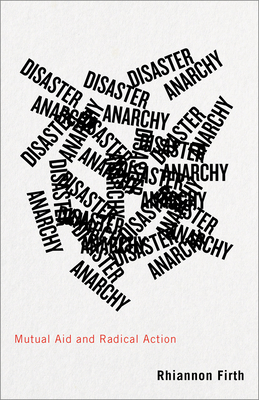
Disaster Anarchy : Mutual Aid and Radical Action
Book Details
Format
Hardback
ISBN-10
0745340458
ISBN-13
9780745340456
Publisher
Pluto Press
Imprint
Pluto Press
Country of Manufacture
GB
Country of Publication
GB
Publication Date
Jul 20th, 2022
Print length
256 Pages
Weight
475 grams
KSh 15,300.00
Temporarily out of stock, due soon
0 in stock
Delivery Location
Delivery fee: Select location
Secure
Quality
Fast
As disasters become more commonplace, we need to think of alternatives for relief
Anarchists have been central in helping communities ravaged by disasters, stepping in when governments wash their hands of the victims. Looking at Hurricane Sandy, Covid-19, and the social movements that mobilized relief in their wake, Disaster Anarchy is an inspiring and alarming book about collective solidarity in an increasingly dangerous world. As climate change and neoliberalism converge, mutual aid networks, grassroots direct action, occupations, and brigades have sprung up in response to this crisis with considerable success. Occupy Sandy was widely acknowledged to have organized relief more effectively than federal agencies or NGOs, and following Covid-19 the term ''mutual aid'' entered common parlance. However, anarchist-inspired relief has not gone unnoticed by government agencies. Their responses include surveillance and co-option, extending at times to violent repression involving police brutality. Arguing that disaster anarchy is one of the most important political phenomena to emerge in the 21st century, Rhiannon Firth shows through her research on and within these movements that anarchist theory and practice are needed to protect ourselves from the disasters of our unequal and destructive economic system.Anarchists have been central in helping communities ravaged by disasters, stepping in when governments wash their hands of the victims. Looking at Hurricane Sandy, Covid-19, and the social movements that mobilised relief in their wake, Disaster Anarchy is an inspiring and alarming book about collective solidarity in an increasingly dangerous world. As climate change and neoliberalism converge, mutual aid networks, grassroots direct action, occupations and brigades have sprung up in response to this crisis with considerable success. Occupy Sandy was widely acknowledged to have organised relief more effectively than federal agencies or NGOs, and following Covid-19 the term ''mutual aid'' entered common parlance. However, anarchist-inspired relief has not gone unnoticed by government agencies. Their responses include surveillance, co-option, extending at times to violent repression involving police brutality. Arguing that disaster anarchy is one of the most important political phenomena to emerge in the twenty-first century, Rhiannon Firth shows through her research on and within these movements that anarchist theory and practice is needed to protect ourselves from the disasters of our unequal and destructive economic system.
Get Disaster Anarchy by Rhiannon Firth at the best price and quality guaranteed only at Werezi Africa's largest book ecommerce store. The book was published by Pluto Press and it has 256 pages.
Customers Who Bought This Also Bought

We Wish to Inform You That Tomorrow We Will Be Killed With Our Families
KSh 2,150.00

Shock Doctrine
KSh 3,050.00

Plague Year
KSh 2,000.00

Famine in Cambodia
KSh 26,700.00

Living Conditions, Disasters and Development
KSh 5,050.00

Second Language Learning and the COVID-19 Pandemic
KSh 21,250.00

Famine in Cambodia
KSh 6,650.00
What Is a City?
KSh 5,500.00
Minority Citizens in Disasters
KSh 5,500.00
Silent Violence – Food, Famine, and Peasantry in Northern Nigeria
KSh 9,350.00

The Weather Report
KSh 3,250.00
Bush Wives and Girl Soldiers
KSh 16,550.00