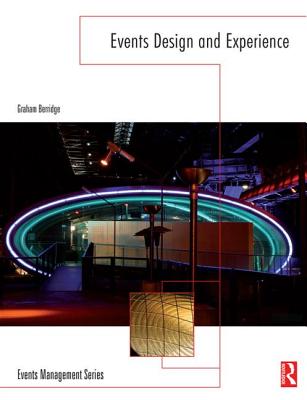
Events Design and Experience
Book Details
Format
Hardback
Book Series
Events Management
ISBN-10
1138128368
ISBN-13
9781138128361
Publisher
Taylor & Francis Ltd
Imprint
Routledge
Country of Manufacture
GB
Country of Publication
GB
Publication Date
Sep 4th, 2015
Print length
320 Pages
Weight
778 grams
Dimensions
44.70 x 25.40 x 2.40 cms
Product Classification:
Public relations
KSh 40,200.00
Currently unavailable
0 in stock
Delivery Location
Delivery fee: Select location
Secure
Quality
Fast
For the first time Events Design and Experience draws together the relationship between event design and the experience of consumers and participants. It explores and analyses the event experience of the individual and how this can be ''controlled'' by design.
By drawing upon ongoing research conducted over several years into the experiences of groups and individuals who attend events this text will ask questions such as: What was the rationale behind a particular event being designed in a certain way? What was the actual experience of consumers? How was the event materially delivered and did the experience created provide a satisfactory outcome? How can experiences be understood (via semiotics) especially the physical elements of an event?
Structured in four sections, Events Design and Experience discusses:
* What are events? An overall view of the industry, its definitions and market demand. It also covers an analysis of previous literature, and draws upon real life events such as Wembley plc, Leapfrog Corporate events and the British Cycling federation
* What is an event experience? An explanation of the nature and stages of experience, and the emergence of the experience industry itself. Cases such as the Proms, London Fashion week ands the Nike Fun run are used to illustrate.
* Designing Experiences. Considers how design itself can impact upon the experience, in some cases fundamentally changing the nature of experience. It asks the question of how experiences are designed and what do they signify to the customer once complete.
* Analysing Event Experiences. Considers how experiences can be analysed and evaluated looking at the artificiality of the event and how this reflects in the experience of consumers. Also includes a review of the psychological processes of perception and interpretation and how meaning and experience can be analysed, and how we may begin to unravel the meanings attributed to certain events.
With international case studies throughout, Events Design and Experience has a coherent user-friendly structure including chapter summaries, review exercises and topics for discussion to consolidate understanding.
By drawing upon ongoing research conducted over several years into the experiences of groups and individuals who attend events this text will ask questions such as: What was the rationale behind a particular event being designed in a certain way? What was the actual experience of consumers? How was the event materially delivered and did the experience created provide a satisfactory outcome? How can experiences be understood (via semiotics) especially the physical elements of an event?
Structured in four sections, Events Design and Experience discusses:
* What are events? An overall view of the industry, its definitions and market demand. It also covers an analysis of previous literature, and draws upon real life events such as Wembley plc, Leapfrog Corporate events and the British Cycling federation
* What is an event experience? An explanation of the nature and stages of experience, and the emergence of the experience industry itself. Cases such as the Proms, London Fashion week ands the Nike Fun run are used to illustrate.
* Designing Experiences. Considers how design itself can impact upon the experience, in some cases fundamentally changing the nature of experience. It asks the question of how experiences are designed and what do they signify to the customer once complete.
* Analysing Event Experiences. Considers how experiences can be analysed and evaluated looking at the artificiality of the event and how this reflects in the experience of consumers. Also includes a review of the psychological processes of perception and interpretation and how meaning and experience can be analysed, and how we may begin to unravel the meanings attributed to certain events.
With international case studies throughout, Events Design and Experience has a coherent user-friendly structure including chapter summaries, review exercises and topics for discussion to consolidate understanding.
Get Events Design and Experience by Graham Berridge at the best price and quality guaranteed only at Werezi Africa's largest book ecommerce store. The book was published by Taylor & Francis Ltd and it has 320 pages.
Customers Who Bought This Also Bought
Trust Me I''m Lying
KSh 2,350.00

Organizational Public Relations
KSh 9,150.00
The Economics of Industrial Innovation
KSh 10,050.00
Public Relations for Management Success
KSh 23,700.00

Professionelles Lead Management
KSh 8,100.00

Engaging Employees through Strategic Communication
KSh 30,950.00

Politik im Spot-Format
KSh 6,100.00
Sprache und Dialog als Führungsinstrumente
KSh 8,100.00

Public Relations in Times of Dissensus
KSh 15,800.00

Crisis Communication in Botswana
KSh 10,100.00

Crisis Response Advertising
KSh 7,900.00
Suchmaschinenmarketing in der Personalakquise
KSh 1,800.00