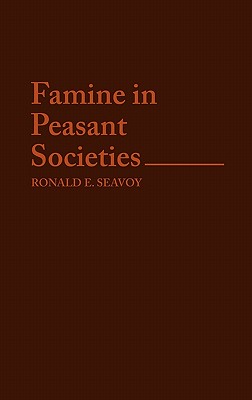
Famine in Peasant Societies.
Book Details
Format
Hardback
ISBN-10
0313251304
ISBN-13
9780313251306
Publisher
Bloomsbury Publishing Plc
Imprint
Praeger Publishers Inc
Country of Manufacture
GB
Country of Publication
GB
Publication Date
Jun 24th, 1986
Print length
490 Pages
KSh 13,500.00
Currently unavailable
0 in stock
Delivery Location
Delivery fee: Select location
Secure
Quality
Fast
In this controversial study, Seavoy offers a new approach to the problem of periodic peacetime famine based on the actual behavior of peasants.
In this controversial study, Seavoy offers a new approach to the problem of periodic peacetime famine based on the actual behavior of peasants. He maintains that it is possible to increase per capita food production without massive and inappropriate technological inputs. Seavoy shifts the focus from modern development economics to a cultural and historical analysis of subsistence agriculture in Western Europe (England and Ireland), Indonesia, and India. From his survey of peasant civilization practices in these countries, he generalizes on the social values that create what he terms the subsistence compromise. In all of the ages and culture, Seavoy finds a consistent social organization of agriculture that produces identical results: seasonal hunger in poor crop years and famine conditions in consecutive poor crop years. He argues that economic policies have failed to increase per capita food production because economists and government planners try to apply market-oriented policies to populations that are not commercially motivated. Once they understand the subsistence compromise, policy-makers can take appropriate political action.
Get Famine in Peasant Societies. by Ronald E. Seavoy at the best price and quality guaranteed only at Werezi Africa's largest book ecommerce store. The book was published by Bloomsbury Publishing Plc and it has 490 pages.
Customers Who Bought This Also Bought

We Wish to Inform You That Tomorrow We Will Be Killed With Our Families
KSh 2,150.00

Shock Doctrine
KSh 3,050.00

Plague Year
KSh 2,000.00

Famine in Cambodia
KSh 26,700.00
Living Conditions, Disasters and Development
KSh 5,050.00

Second Language Learning and the COVID-19 Pandemic
KSh 21,250.00

Famine in Cambodia
KSh 6,650.00
What Is a City?
KSh 5,500.00
Minority Citizens in Disasters
KSh 5,500.00
Silent Violence – Food, Famine, and Peasantry in Northern Nigeria
KSh 9,350.00

The Weather Report
KSh 3,250.00
Bush Wives and Girl Soldiers
KSh 16,550.00