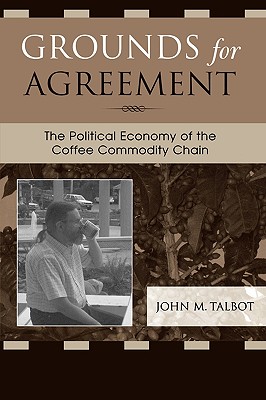
Grounds for Agreement : The Political Economy of the Coffee Commodity Chain
Book Details
Format
Hardback
ISBN-10
0742526283
ISBN-13
9780742526280
Publisher
Bloomsbury Publishing Plc
Imprint
Rowman & Littlefield
Country of Manufacture
GB
Country of Publication
GB
Publication Date
Aug 13th, 2004
Print length
256 Pages
Weight
454 grams
Dimensions
23.50 x 17.20 x 2.10 cms
KSh 21,600.00
Currently unavailable
0 in stock
Delivery Location
Delivery fee: Select location
Secure
Quality
Fast
This work analyzes changes in the structure of the coffee commodity chain over the period since World War II. It follows the typical consumer American dollar spent on coffee in the developed world and shows how this dollar is divided up among the coffee growers, processors, and states.
As the popularity of coffee and coffee shops has grown worldwide in recent years, so has another trend—globalization, which has greatly affected growers and distributors. This book analyzes changes in the structure of the coffee commodity chain since World War II. It follows the typical consumer dollar spent on coffee in the developed world and shows how this dollar is divided up among the coffee growers, processors, states, and transnational corporations involved in the chain. By tracing how this division of the coffee dollar has changed over time, Grounds for Agreement demonstrates that the politically regulated world market that prevailed from the 1960s through the 1980s was more fair for coffee growers than is the current, globalized market controlled by the corporations. Talbot explains why fair trade and organic coffees, by themselves, are not adequate to ensure fairness for all coffee growers and he argues that a return to a politically regulated market is the best way to solve the current crisis among coffee growers and producers.
Get Grounds for Agreement by John M. Talbot at the best price and quality guaranteed only at Werezi Africa's largest book ecommerce store. The book was published by Bloomsbury Publishing Plc and it has 256 pages.
Customers Who Bought This Also Bought

Black Wave
KSh 2,700.00

Siege
KSh 2,000.00

Extractive Capitalism
KSh 2,150.00

Strategy
KSh 4,350.00

Fourth Industrial Revolution
KSh 2,700.00

On China
KSh 3,400.00

Dead Aid
KSh 3,400.00
The Bottom Billion
KSh 2,500.00

Leadership
KSh 2,700.00

How to Win a Trade War
KSh 3,050.00

Understanding Global Conflict and Cooperation: An Introduction to Theory and History
KSh 14,000.00

Nuclear Age
KSh 5,400.00