

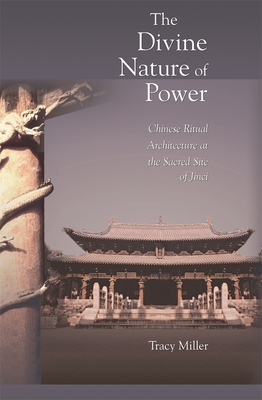
Harnessing Divinity : Generative Design and the Buddhist Architecture of Early Medieval China
by
Tracy Miller
Book Details
Format
Hardback
Book Series
Harvard East Asian Monographs
ISBN-10
067430750X
ISBN-13
9780674307506
Publisher
Harvard University, Asia Center
Imprint
Harvard University, Asia Center
Country of Manufacture
GB
Country of Publication
GB
Publication Date
Mar 26th, 2027
Print length
426 Pages
KSh 12,050.00
Not Yet Published
0 in stock
Delivery Location
Delivery fee: Select location
Secure
Quality
Fast
Through detailed case studies of sixth-century architecture, Harnessing Divinity argues that Buddhist halls in Early Medieval China were not mere variations of imperial palaces but were designed with active spiritual technologies that could harness natural energies and facilitate communication with higher realms.
In traditional studies of Chinese architecture, Buddhist halls are often seen as mere variations of imperial palaces and understood primarily as shelters. Harnessing Divinity challenges this view, arguing that ritual buildings in Early Medieval China were designed with active spiritual technologies that could harness natural energies and facilitate communication with higher realms. Focusing on the Yellow River Valley during the beginning of state-sponsored Buddhism in China, this book reveals how a specific design strategy—the “floral diagram” or “daisy wheel”—was used to encode buildings with intrinsic, generative power. Tracy Miller demonstrates that this geometric method allowed structures to function as “mesocosms,” bridging terrestrial and celestial forces to support both state-building by the ruling elite and spiritual transformation of devotees. Through detailed case studies of sixth-century monuments, Miller argues that creators integrated empirically verifiable design principles with ideologies from West, Central, and South Asia to construct ritually potent spaces. The mathematical precision, critical for structural integrity, allowed for the building of taller, grander structures that projected divine support for the state. By tracing the use of a particular “generative design,” this book offers a compelling new perspective on the intersection of science, religion, and material culture in pre-modern China, showing how architecture was scaled to aid both imperial and common patrons.
Get Harnessing Divinity by Tracy Miller at the best price and quality guaranteed only at Werezi Africa's largest book ecommerce store. The book was published by Harvard University, Asia Center and it has 426 pages.
Customers Who Bought This Also Bought
The Man Who Stole the Gods
KSh 3,600.00

The Three Perfections – Japanese Poetry, Calligraphy, and Painting
KSh 11,050.00

Japanese Art
KSh 2,700.00

Japan Envisions the West – 16th–19th Century Japanese Art from Kobe City Museum
KSh 10,100.00

Exploring Central Asia – From the Steppes to the High Pamirs, 1896–1899
KSh 29,600.00

Experimental Beijing – Gender and Globalization in Chinese Contemporary Art
KSh 28,800.00
Forbidden City – Imperial Treasures from the Palace Museum, Beijing
KSh 13,050.00

The Unknown Craftsman
KSh 6,300.00

A Concise History of Buddhist Art in Siam
KSh 5,950.00

Weavers'' Stories from Island Southeast Asia
KSh 5,200.00

Time Exposures
KSh 7,400.00

Big Bazooms 5
KSh 2,900.00

More in This Genre
The Man Who Stole the Gods
KSh 3,600.00
The Three Perfections – Japanese Poetry, Calligraphy, and Painting
KSh 11,050.00
Japanese Art
KSh 2,700.00
Japan Envisions the West – 16th–19th Century Japanese Art from Kobe City Museum
KSh 10,100.00
Exploring Central Asia – From the Steppes to the High Pamirs, 1896–1899
KSh 29,600.00
Experimental Beijing – Gender and Globalization in Chinese Contemporary Art
KSh 28,800.00
