Cart 0
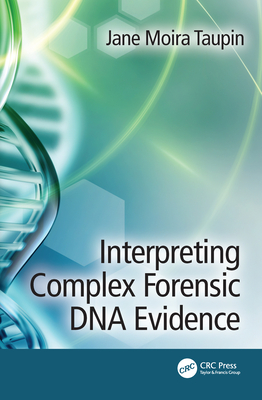
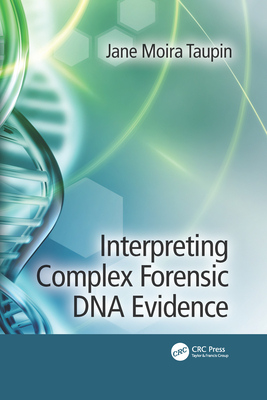
Interpreting Complex Forensic DNA Evidence
Click to zoom

Share this book

Interpreting Complex Forensic DNA Evidence

Book Details

Format Paperback / Softback
ISBN-10 1032084340
ISBN-13 9781032084343
Publisher Taylor & Francis Ltd
Imprint CRC Press
Country of Manufacture GB
Country of Publication GB
Publication Date Jun 30th, 2021
Print length 180 Pages
Weight 267 grams
Ksh 10,800.00
Werezi Extended Catalogue 0 in stock

Delivery Location

Delivery fee: Select location

Secure
Quality
Fast
Interpreting Complex Forensic DNA Evidence is a handy guide to recent advances and emerging issues in interpreting complex DNA evidence and profiles for use in criminal investigations. This book provides tools to assist the criminal investigator, forensic expert, and legal professional.

Interpreting Complex Forensic DNA Evidence is a handy guide to recent advances—and emerging issues—in interpreting complex DNA evidence and profiles for use in criminal investigations. In certain cases, DNA cannot be connected to a specific biological material such as blood, semen or saliva. How or when the DNA was deposited may be an issue. The possibility of generating DNA profiles from touched objects, where there may not be a visible deposit, has expanded the scope and number of exhibits submitted for DNA analysis.


With such advances, and increasing improvements in technological capabilities in testing samples, this means it is possible to detect ever smaller amounts of DNA. There are also many efforts underway to seek was to interpret DNA profiles that are sub-optimal—either relative to the amount required by the testing kit and, potentially, the quality of the obtained sample. Laboratories often use enhancements in order to obtain a readable DNA profile.


The broad-reaching implications of improving DNA sensitivity have led to this next, emerging generation of more complex profiles. Examples partial profiles that do not faithfully reflect the proposed donor, or mixtures of partial DNA from multiple people. A complexity threshold has been proposed to limit interpretation of poor-quality data. Research is now addressing the interpretation of transfer of trace amounts of DNA. Complex issues are arising in trial that need to be reconciled as such complexity has added challenges to the interpretation of evidence and its introduction or dismissal in certain cases in the courts.


Key Features:


  • Addresses DNA transfer, from person-to-person as well as to objects


  • Outlines each stage required to produce a DNA profile from an exhibit—including collection, handling, storage, and analysis


  • Discusses ethics, subjectivity, and bias—including cognitive dissonance—as they relate specifically to complex DNA evidence


  • Highlights current techniques and the latest advances in DNA analysis, including advances in familial DNA searches


Interpreting Complex Forensic DNA Evidence provides tools to assist the criminal investigator, forensic expert, and legal professional when posed with a DNA result in a forensic report or testimony. The result—and any associated statistic—may not reveal any ambiguity, complexity, or the assumptions involved in deriving it. Questions from resolved criminal cases are posed, and the relevant forensic literature, provided for the reader to assess a DNA result and any associated statistic. Case studies throughout illustrate concepts and emphasize the need for conclusions in the forensic report that are supported by the data.


Get Interpreting Complex Forensic DNA Evidence by at the best price and quality guaranteed only at Werezi Africa's largest book ecommerce store. The book was published by Taylor & Francis Ltd and it has pages.

Mind, Body, & Spirit

Shopping Cart

Africa largest book store

Sub Total:
Ebooks

Digital Library
Coming Soon

Our digital collection is currently being curated to ensure the best possible reading experience on Werezi. We'll be launching our Ebooks platform shortly.