
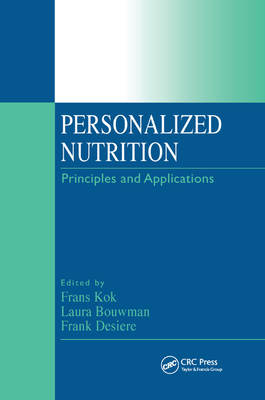
Personalized Nutrition : Principles and Applications
Book Details
Format
Paperback / softback
ISBN-10
0367388715
ISBN-13
9780367388713
Publisher
Taylor & Francis Ltd
Imprint
CRC Press
Country of Manufacture
GB
Country of Publication
GB
Publication Date
Sep 11th, 2019
Print length
304 Pages
Weight
470 grams
Dimensions
15.50 x 23.40 x 1.90 cms
Product Classification:
Dietetics & nutritionDietetics and nutrition
KSh 12,800.00
Temporarily out of stock, due soon
0 in stock
Delivery Location
Delivery fee: Select location
Secure
Quality
Fast
From one person to the next, optimal health is governed by a huge array of minor genetic differences. When modulated by a variety of food bioiactives, these differences result in changes in gene expression and subsequent phenotypic expression. Combining biomedical and social science with contributions from leaders in both fields, Personalized Nutrition: Principles and Applications illustrates molecular, physiological, epidemiological, and public health aspects with examples from major diseases and discusses the behavioral, ethical, and consumer perspectives that will influence a successful introduction of personalized nutrition.
Divided into three sections, the book answers pertinent questions crucial to the mainstream acceptance of personalized nutrition: to what extent is this personal diet-and-health relationship practically valid? how can nutrition science demonstrate this? And what is the proposition of stakeholders in society, including the consumer?
The book begins with an overview of the state-of-the-science in nutrigenomic technologies including transcriptomics, proteomics, and metabolomics. It covers the use of genomics technology for a better understanding of the molecular mechanisms involved in major diet-related chronic disorders such as chronic inflammation, cardiovascular disease, diabetes, cancer, and obesity.
Section two compares the practices and opinions of scientists, food companies, consumers, competitive athletes, and health care providers on the subject of personalized nutrition. It reviews marketing potential, consumer attitudes, and the ethical issues surrounding personalized advice.
The final section focuses on humanitarian concerns related to developing countries and calls for international efforts to develop best practices, collaboration, and dataset sharing. The authors also consider ongoing innovations in food technology, nutrigenomics, and food delivery systems.
Divided into three sections, the book answers pertinent questions crucial to the mainstream acceptance of personalized nutrition: to what extent is this personal diet-and-health relationship practically valid? how can nutrition science demonstrate this? And what is the proposition of stakeholders in society, including the consumer?
The book begins with an overview of the state-of-the-science in nutrigenomic technologies including transcriptomics, proteomics, and metabolomics. It covers the use of genomics technology for a better understanding of the molecular mechanisms involved in major diet-related chronic disorders such as chronic inflammation, cardiovascular disease, diabetes, cancer, and obesity.
Section two compares the practices and opinions of scientists, food companies, consumers, competitive athletes, and health care providers on the subject of personalized nutrition. It reviews marketing potential, consumer attitudes, and the ethical issues surrounding personalized advice.
The final section focuses on humanitarian concerns related to developing countries and calls for international efforts to develop best practices, collaboration, and dataset sharing. The authors also consider ongoing innovations in food technology, nutrigenomics, and food delivery systems.
Get Personalized Nutrition by Frank Desiere at the best price and quality guaranteed only at Werezi Africa's largest book ecommerce store. The book was published by Taylor & Francis Ltd and it has 304 pages.
Customers Who Bought This Also Bought

Eat to Beat Depression and Anxiety
KSh 2,700.00

The Gut-Immune Connection
KSh 3,600.00

The Lazarus Strategy
KSh 2,350.00

World Food and Agriculture – Statistical Pocketbook 2024
KSh 4,500.00

Brain Boosting Food for Women with ADHD
KSh 1,450.00

World Food and Agriculture – Statistical Pocketbook 2022
KSh 4,500.00

World Food and Agriculture – Statistical Pocketbook 2023
KSh 4,500.00
Advances in Probiotic Technology
KSh 33,850.00

Human Malnutrition
KSh 35,100.00

Alliances for Obesity Prevention
KSh 3,950.00

The Vitamin Cure for Migraines
KSh 3,400.00
Breeding for Enhanced Nutrition and Bio-Active Compounds in Food Legumes
KSh 25,200.00
More in This Genre
Eat to Beat Depression and Anxiety
KSh 2,700.00
The Gut-Immune Connection
KSh 3,600.00
The Lazarus Strategy
KSh 2,350.00
World Food and Agriculture – Statistical Pocketbook 2024
KSh 4,500.00
Brain Boosting Food for Women with ADHD
KSh 1,450.00
World Food and Agriculture – Statistical Pocketbook 2022
KSh 4,500.00
