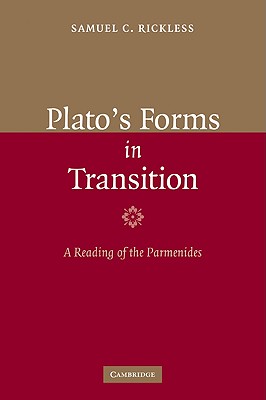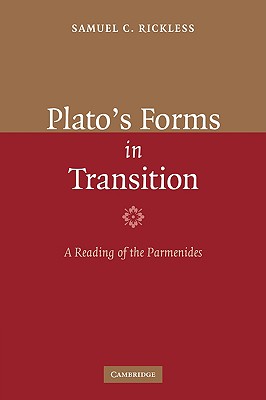
Plato''s Forms in Transition : A Reading of the Parmenides
Book Details
Format
Hardback
ISBN-10
0521864569
ISBN-13
9780521864565
Publisher
Cambridge University Press
Imprint
Cambridge University Press
Country of Manufacture
GB
Country of Publication
GB
Publication Date
Nov 23rd, 2006
Print length
292 Pages
Weight
600 grams
Dimensions
23.50 x 16.10 x 2.50 cms
Product Classification:
Western philosophy: Ancient, to c 500Ancient Greek and Roman philosophy
KSh 17,100.00
Currently unavailable
0 in stock
Delivery Location
Delivery fee: Select location
Secure
Quality
Fast
Samuel Rickless argues that the main point of Plato's Parmenides is to change our conception of the Forms by granting that they can have contrary properties. With the help of his study, we can understand exactly why Plato wrote the Parmenides and what role it played in his philosophical development.
There is a mystery at the heart of Plato's Parmenides. In the first part, Parmenides criticizes what is widely regarded as Plato's mature theory of Forms, and in the second, he promises to explain how the Forms can be saved from these criticisms. Ever since the dialogue was written, scholars have struggled to determine how the two parts of the work fit together. Did Plato mean us to abandon, keep or modify the theory of Forms, on the strength of Parmenides' criticisms? Samuel Rickless offers something that has never been done before: a careful reconstruction of every argument in the dialogue. He concludes that Plato's main aim was to argue that the theory of Forms should be modified by allowing that forms can have contrary properties. To grasp this is to solve the mystery of the Parmenides and understand its crucial role in Plato's philosophical development.
Get Plato''s Forms in Transition by Samuel C. Rickless at the best price and quality guaranteed only at Werezi Africa's largest book ecommerce store. The book was published by Cambridge University Press and it has 292 pages.
Customers Who Bought This Also Bought

Silent Patient
KSh 2,000.00
Xmeditations
KSh 700.00
Discourses and Selected Writings
KSh 2,000.00
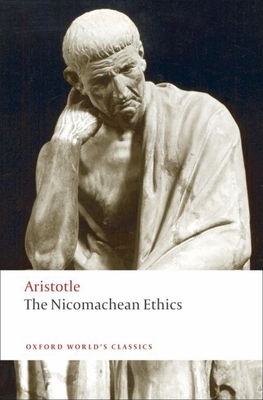
The Nicomachean Ethics
KSh 1,600.00
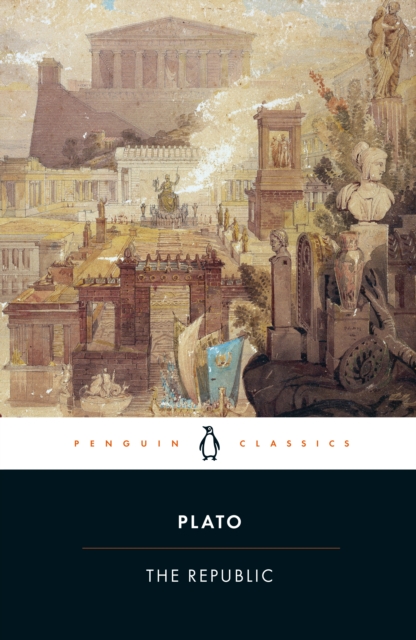
The Republic
KSh 2,350.00

Handbook (The Encheiridion)
KSh 1,600.00
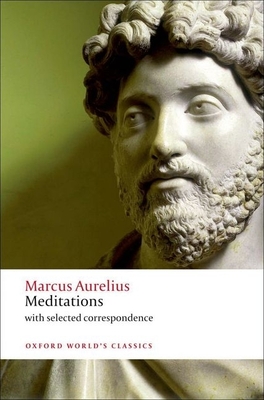
Meditations
KSh 1,600.00

Anaximander
KSh 2,000.00
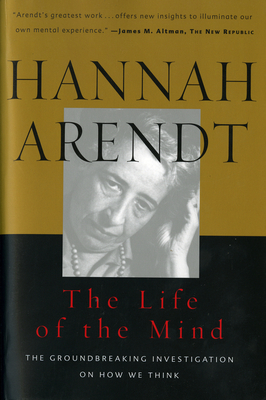
The Life Of The Mind
KSh 3,950.00
Letters from a Stoic
KSh 1,800.00
Great Dialogues of Plato
KSh 1,450.00
Courage Is Calling
KSh 2,150.00