
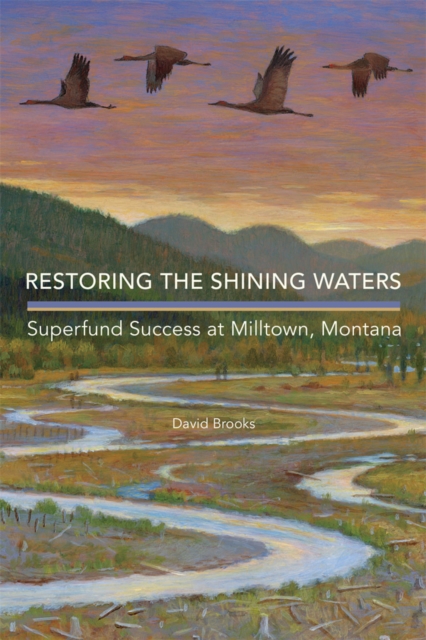
Restoring the Shining Waters : Superfund Success at Milltown, Montana
by
David Brooks
Book Details
Format
Paperback / softback
ISBN-10
0806196394
ISBN-13
9780806196398
Publisher
University of Oklahoma Press
Imprint
University of Oklahoma Press
Country of Manufacture
GB
Country of Publication
GB
Publication Date
Oct 27th, 2025
Print length
280 Pages
Weight
248 grams
KSh 3,700.00
Currently unavailable
0 in stock
Delivery Location
Delivery fee: Select location
Secure
Quality
Fast
No sooner had the EPA established the Superfund program in 1980 to clean up the nation’s toxic waste dumps and other abandoned hazardous waste sites, than a little Montana town found itself topping the new program’s National Priority List. Milltown, a place too small to warrant a listing in the U.S. Census, sat alongside a modest hydroelectric dam at the confluence of the Clark Fork and Blackfoot Rivers. For three-quarters of a century, arsenic-laced waste from some of the world’s largest copper-mining operations had accumulated behind the dam. Soon, Milltown became the site of Superfund’s first dam removal and watershed restoration, marking a turning point in U.S. environmental history. The story of this dramatic shift is the tale of individuals rallying to reclaim a place they valued beyond its utility. In Restoring the Shining Waters, David Brooks gives an intimate account of how local citizens—homeowners, university scientists, county health officials, grassroots environmentalists, business leaders, and thousands of engaged residents—brought about the removal of Milltown Dam. Interviews with townspeople, outside environmentalists, mining executives, and federal officials reveal how the everyday actions of individuals got the dam removed and, in the process, pushed Superfund to allow more public participation in decision making and to emphasize restoration over containment of polluted environments. A federal program designed to deal with the toxic legacies of industrialization thus became a starting point for restoring America’s most damaged environments, largely through the efforts of local communities. With curiosity, conviction, and a strong sense of place, the small town of Milltown helped restore an iconic western river valley—and in doing so, shaped the history of Superfund and modern environmentalism.
Get Restoring the Shining Waters by David Brooks at the best price and quality guaranteed only at Werezi Africa's largest book ecommerce store. The book was published by University of Oklahoma Press and it has 280 pages.
Customers Who Bought This Also Bought

A Modern History of the Somali
KSh 5,300.00

Sapiens
KSh 2,350.00

Rise Fall Great Powers
KSh 3,050.00

Legacy of Violence
KSh 3,150.00

Chip War
KSh 2,000.00

Covering Islam
KSh 2,350.00

They Came Before Columbus
KSh 3,400.00

Hiroshima
KSh 2,000.00

Guns, Germs and Steel
KSh 2,400.00

Silk Roads
KSh 3,050.00

Empire
KSh 2,700.00

Strategy
KSh 4,350.00
More by David Brooks

How To Know a Person
KSh 2,350.00

Road to Character
KSh 2,350.00

Social Animal
KSh 2,500.00

Political Writing
KSh 9,550.00

Campus Life
KSh 4,500.00

Dan Levenson
KSh 4,150.00

How To Know a Person
KSh 4,500.00

Is Capitalism Broken?
KSh 1,450.00

Deep Learning for Computer Architects
KSh 9,000.00

Animal Dreams
KSh 4,850.00

Political Writing: A Guide to the Essentials
KSh 30,600.00

Research Infrastructures for Hardware Accelerators
KSh 4,500.00