
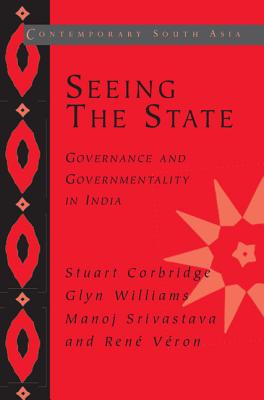
Seeing the State : Governance and Governmentality in India
Book Details
Format
Paperback / softback
Book Series
Contemporary South Asia
ISBN-10
0521542553
ISBN-13
9780521542555
Publisher
Cambridge University Press
Imprint
Cambridge University Press
Country of Manufacture
GB
Country of Publication
GB
Publication Date
Sep 22nd, 2005
Print length
334 Pages
Weight
530 grams
Dimensions
22.90 x 15.30 x 2.10 cms
Product Classification:
Comparative politics
KSh 7,100.00
Currently unavailable
0 in stock
Delivery Location
Delivery fee: Select location
Secure
Quality
Fast
How do poor people in India understand and make use of the state in their daily lives? The authors consider key debates in development studies on participation and good governance to answer these questions. They study the extent to which poorer people can engage the political process as citizens.
Poor people confront the state on an everyday basis all over the world. But how do they see the state, and how are these engagements conducted? This book considers the Indian case where people''s accounts, in particular in the countryside, are shaped by a series of encounters that are staged at the local level, and which are also informed by ideas that are circulated by the government and the broader development community. Drawing extensively on fieldwork conducted in eastern India and their broad range of expertise, the authors review a series of key debates in development studies on participation, good governance, and the structuring of political society. They do so with particular reference to the Employment Assurance Scheme and primary education provision. Seeing the State engages with the work of James Scott, James Ferguson and Partha Chatterjee, and offers a new interpretation of the formation of citizenship in South Asia.
Get Seeing the State by Glyn Williams, Manoj Srivastava at the best price and quality guaranteed only at Werezi Africa's largest book ecommerce store. The book was published by Cambridge University Press and it has 334 pages.
Customers Who Bought This Also Bought

Age of Revolutions
KSh 2,350.00

How Civil Wars Start
KSh 2,000.00

Autobiography
KSh 2,350.00

The Origins of Political Order
KSh 2,700.00
Summer of Our Discontent
KSh 4,500.00

Political Order and Political Decay
KSh 2,700.00

Great Power Diplomacy
KSh 5,400.00

Summer of Our Discontent
KSh 2,350.00

Narrow Corridor
KSh 2,350.00

Israel’s Palestinians
KSh 4,700.00
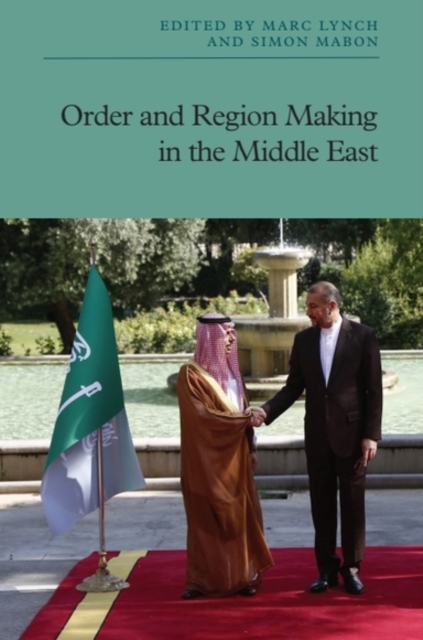
Order and Region Making in the Middle East
KSh 17,100.00

Nasser's Blessed Movement
KSh 3,400.00
More by Glyn Williams, Manoj Srivastava

Language, Hegemony and the European Union
KSh 8,100.00

Language, Hegemony and the European Union
KSh 8,100.00
Social Theory and Language
KSh 30,950.00

Sociolinguistics
KSh 5,850.00

The Desert and the Dream
KSh 3,050.00
Geographies of Developing Areas
KSh 37,800.00

French Discourse Analysis
KSh 30,950.00
Geographies of Developing Areas
KSh 16,600.00
Reinventing India – Liberalization, Hindu Nationalism and Popular Democracy
KSh 10,800.00
Naturalists at Sea – Scientific Travellers from Dampier to Darwin
KSh 3,400.00
Knowledge Economy, Language and Culture
KSh 5,950.00
Real Markets and Environmental Change in Kerala, India
KSh 26,300.00
