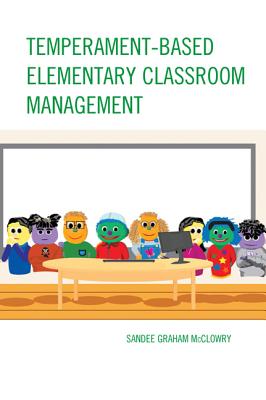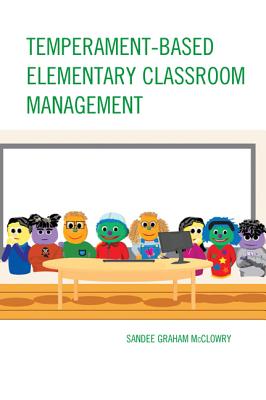
Temperament-Based Elementary Classroom Management
Book Details
Format
Paperback / softback
ISBN-10
1475809433
ISBN-13
9781475809435
Publisher
Bloomsbury Publishing Plc
Imprint
Rowman & Littlefield
Country of Manufacture
GB
Country of Publication
GB
Publication Date
Apr 28th, 2014
Print length
150 Pages
Weight
312 grams
Dimensions
17.70 x 25.40 x 1.20 cms
KSh 7,000.00
Currently unavailable
0 in stock
Delivery Location
Delivery fee: Select location
Secure
Quality
Fast
This book presents an alternative to the “one size fits all” classroom approach. The majority of classroom management books present generic strategies as if they are applicable to all students. The underlying assertion of such books is that if teachers use such approaches, student behavior problems will seldom occur. An alternative framework, presented in this book, asserts that teachers need to incorporate knowledge about temperament into their strategies for classroom management. As studies have demonstrated, targeted temperament-based strategies succeed where global disciplinary practices have failed. Because students differ in their temperaments, variations in classroom behavior are to be expected. Child temperament is the inborn individual characteristics that affect the way children react to different situations. It is also a social processing system through which children view and interact with the world, both altering the responses of others and contributing toward their own development. Once teachers learn the major tenets of temperament, they no longer view their students as intentionally misbehaving. Instead they understand how the temperaments of their students influence their classroom behavior. Such insights release teachers from engaging in futile battles with their students. They can redirect their energies into enhancing their relationships with their students, implementing effective temperament-based strategies, and, as a result, spend more time on instructional activities.
Get Temperament-Based Elementary Classroom Management by Sandee Graham McClowry at the best price and quality guaranteed only at Werezi Africa's largest book ecommerce store. The book was published by Bloomsbury Publishing Plc and it has 150 pages.
Customers Who Bought This Also Bought

How to Survive School Yr
KSh 2,000.00

Teaching Science through the Grades
KSh 2,700.00
Conceptual Playworlds for Belonging
KSh 7,800.00
Conceptual Playworlds for Belonging
KSh 4,350.00
Language and Literature for the IB MYP 2
KSh 5,600.00
Secondary English for Generation Alpha
KSh 7,900.00

The Wonders of Waldorf Chemistry
KSh 3,600.00

The Theatre Artist''s Guide to Consent-Based Pedagogy
KSh 7,200.00

The Behaviour Whisperer
KSh 4,100.00
Real-World Writers: A Handbook for Teaching Writing with 7-11 Year Olds
KSh 5,500.00
Teaching Chemistry with TOYS
KSh 3,600.00

Maths - Ages 8-9
KSh 1,100.00