
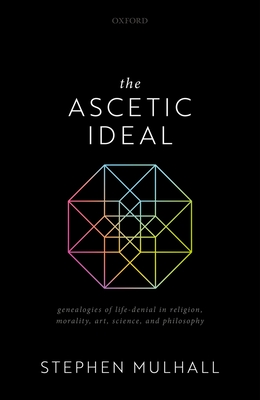
The Ascetic Ideal : Genealogies of Life-Denial in Religion, Morality, Art, Science, and Philosophy
Book Details
Format
Hardback
ISBN-10
0192896881
ISBN-13
9780192896889
Publisher
Oxford University Press
Imprint
Oxford University Press
Country of Manufacture
GB
Country of Publication
GB
Publication Date
Aug 12th, 2021
Print length
312 Pages
Weight
630 grams
Dimensions
16.20 x 24.00 x 2.80 cms
KSh 18,800.00
Currently unavailable
0 in stock
Delivery Location
Delivery fee: Select location
Secure
Quality
Fast
Stephen Mulhall traces the development of an ideal of asceticism through Western culture. He shows how influential this self-denying attitude to life has been not just in religion and morality but in aesthetics, science, and philosophy. And he illuminates the role of the ascetic ideal in the thought of Nietzsche, who introduced the concept.
In The Ascetic Ideal, Stephen Mulhall shows how areas of cultural life that seem to be either essentially unconnected to evaluative commitments (science and philosophy) or to involve non-moral values (aesthetics) are in fact deeply informed by ethico-religious commitments, for better and for worse.The book develops a reading of Nietzsche''s concept of ''the ascetic ideal'', which he used to track the evolution, mutation, and expansion of the system of slave moral values, associated primarily with Judaeo-Christian religious belief through diverse fields of Western European culture--not just religion and morality, but aesthetics, science, and philosophy. Mulhall also offers an interpretation of Nietzsche''s genealogical method that aims to rebut standard criticisms of its nature, and to emphasize its potential for enhancing philosophical understanding more generally. The focus throughout is on developments in those fields which occurred after the end of Nietzsche''s intellectual career, and in particular on influential modes of thought and practice that have a contemporary significance. The goal is not simply to argue that Nietzsche''s diagnosis and critique retains considerable merit, but also to show that Nietzsche is himself significantly indebted to the ideals he criticizes, and that this opens up a possibility of synthesizing elements of his approach with those drawn from its target. Hence, the book also tracks various ways in which the object of Nietzsche''s criticism has undergone further mutations (just as his genealogical method would suggest), and in doing so has generated ways of pursuing the values central to asceticism that avoid Nietzsche''s criticisms, and might even further his own goals.
Get The Ascetic Ideal by Stephen Mulhall at the best price and quality guaranteed only at Werezi Africa's largest book ecommerce store. The book was published by Oxford University Press and it has 312 pages.
Customers Who Bought This Also Bought

Being and Nothingness
KSh 7,300.00
The Birth of Tragedy
KSh 1,800.00

Stranger Faces
KSh 2,500.00

The Life Of The Mind
KSh 3,950.00

In Praise of Shadows
KSh 1,800.00
Critique of Judgement
KSh 2,700.00

What Artists Wear
KSh 2,700.00

In Praise of Shadows
KSh 2,700.00

Critique of Judgment
KSh 5,800.00
The Birth of Tragedy
KSh 1,600.00
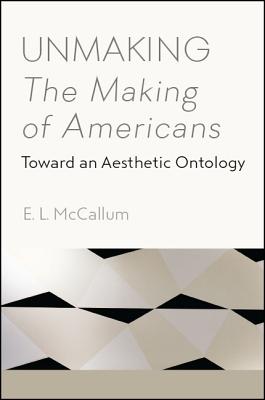
Unmaking the Making of Americans
KSh 4,900.00

Art and Beauty in the Middle Ages
KSh 2,000.00
More by Stephen Mulhall
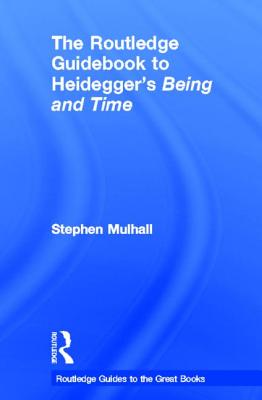
The Routledge Guidebook to Heidegger''s Being and Time
KSh 26,300.00

Philosophy''s Version of Pastoral
KSh 6,300.00

The Ascetic Ideal
KSh 5,100.00
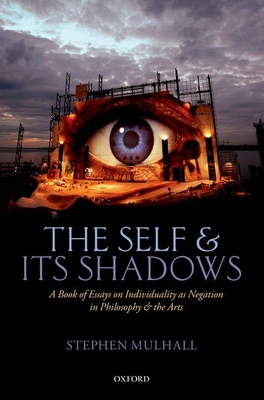
The Self and its Shadows
KSh 17,750.00

In Other Words
KSh 10,600.00
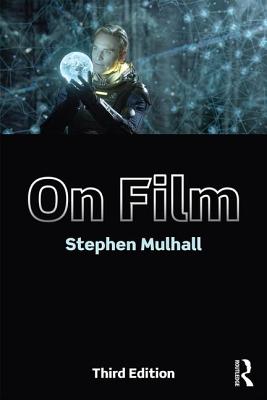
On Film
KSh 6,250.00
Routledge Philosophy GuideBook to Heidegger and Being and Time
KSh 14,950.00

Inheritance and Originality
KSh 30,950.00
On Being in the World (Routledge Revivals)
KSh 7,900.00
The Great Riddle
KSh 11,550.00
On Being in the World (Routledge Revivals)
KSh 30,950.00

Inheritance and Originality
KSh 11,550.00
