Unbridled : Studying Religion in Performance
Book Details
Format
Hardback
Book Series
Class 200: New Studies in Religion
ISBN-10
0226816583
ISBN-13
9780226816586
Publisher
The University of Chicago Press
Imprint
University of Chicago Press
Country of Manufacture
US
Country of Publication
GB
Publication Date
Jul 27th, 2022
Print length
144 Pages
Weight
412 grams
Dimensions
15.80 x 23.60 x 2.10 cms
Product Classification:
Literary studies: plays & playwrightsReligion & beliefs
KSh 13,700.00
Currently unavailable
0 in stock
Delivery Location
Delivery fee: Select location
Secure
Quality
Fast
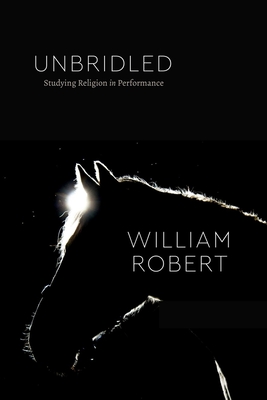
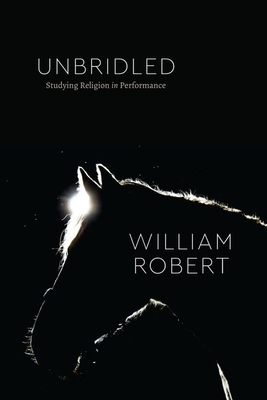
A study of religion through the lens of Peter Shaffer’s play Equus. In Unbridled, William Robert uses Equus, Peter Shaffer’s enigmatic play about a boy passionately devoted to horses, to think differently about religion. For several years, Robert has used Equus to introduce students to the study of religion, provoking them to conceive of religion in unfamiliar, even uncomfortable ways. In Unbridled, he is inviting readers to do the same. A play like Equus tangles together text, performance, practice, embodiment, and reception. Studying a play involves us in playing different roles, as ourselves and others, and those roles, as well as the imaginative work they require, are critical to the study of religion. By approaching Equus with the reader, turning the play around and upside-down, Unbridled transforms standard approaches to the study of religion, engaging with themes including ritual, sacrifice, worship, power, desire, violence, and sexuality, as well as thinkers including Judith Butler, Sigmund Freud, Karl Marx, Friedrich Nietzsche, and Jonathan Z. Smith. As Unbridled shows, the way themes and theories play out in Equus challenges us to reimagine the study of religion through open questions, contrasting perspectives, and alternative modes of interpretation and appreciation.
Get Unbridled by William Robert at the best price and quality guaranteed only at Werezi Africa's largest book ecommerce store. The book was published by The University of Chicago Press and it has 144 pages.
Customers Who Bought This Also Bought
Death and the King''s Horseman
KSh 2,000.00
View from the Bridge
KSh 1,800.00
Streetcar Named Desire
KSh 1,800.00
Lewis Carroll and "Alice" on Stage
KSh 9,350.00

Cat on a Hot Tin Roof
KSh 1,800.00
Spy Who Came in from the Cold
KSh 2,150.00

Shakespeare Book
KSh 4,250.00
Three Sisters
KSh 2,350.00
Exiles
KSh 1,600.00
Plays by Mediterranean Women
KSh 1,900.00

Somewhere, A Boy And A Bear
KSh 4,500.00

Samuel Beckett: Faber Critical Guide
KSh 1,800.00