
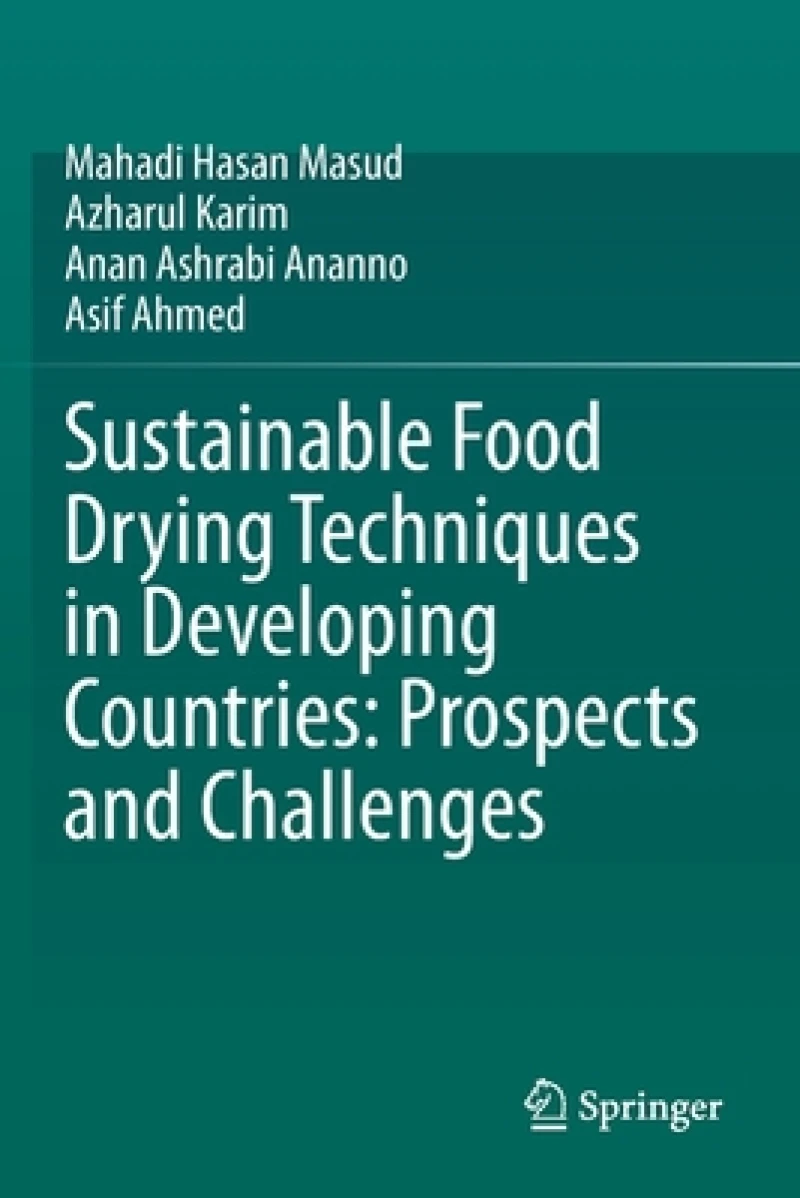
Sustainable Food Drying Techniques in Developing Countries: Prospects and Challenges
2020 ed.
Book Details
Format
Paperback / Softback
ISBN-10
3030424782
ISBN-13
9783030424787
Edition
2020 ed.
Publisher
Springer Nature Switzerland AG
Imprint
Springer Nature Switzerland AG
Country of Manufacture
GB
Country of Publication
GB
Publication Date
May 9th, 2021
Print length
189 Pages
Weight
334 grams
Dimensions
23.60 x 15.50 x 1.60 cms
Ksh 16,200.00
Werezi Extended Catalogue
Delivery in 14 days
1 copies in stock
Delivery Location
Delivery fee: Select location
Delivery in 14 days
Secure
Quality
Fast
This book presents a comprehensive review of renewable energy-based sustainable drying techniques for developing countries. Sustainable food drying techniques in developing countries: Prospects and Challenges is a singular work in the field of food preservation and affordable drying technology.
This book presents a comprehensive review of renewable energy-based sustainable drying techniques for developing countries. Aspiring towards a world with zero food waste, the book has provided discussion on sustainable drying techniques in terms of energy efficiency. The socio-economic condition of each developing country is unique; therefore, has specific technological requirements. As such, the book presents discussions on food waste scenario around the world, the socio-economic status of developing countries and their correlation with food. The book gives an overview of the quality aspects of drying, along with the required energy and time to retain these features. Additionally, a method of selecting drying techniques for developing countries, taking the cost and safety factor into consideration, has been discussed extensively Also, the renewable and non-renewable energy resources of low income, lower-middle income, middle income, and high-income developing countries havebeen analyzed and presented. The book also highlights the available drying techniques that are currently being practiced by the consumers and industries of developing countries. The book recommends ten sustainable drying technologies for the developing countries and describes their working principle. Discussion on potential challenges for sustainable drying technology adoption is also presented. The book presents up-to-date research on sustainable drying techniques and their impact on developing countries to reduce food waste. Food waste is not only a humanitarian concern but also a threat to environmental sustainability. Currently, one-third of all produced food is being wasted, when nearly 805 million people - including children remain undernourished on a daily basis. In an effort to solve this crisis, a number of food preservations techniques are being practiced in food supply chain. Drying is one such preservation technique that prevents microbial proliferation, slows enzymatic reaction and preserves the physio-chemical properties of food. Albeit, drying is an effective means of food preservation; it is also highly energy-intensive. Developing countries do not have sufficient energy and financial resources to adopt conventional (expensive and high energy) drying techniques. As such, this is the first reference work dedicated to discussing the prospects and challenges of sustainable (renewable energy based and inexpensive) drying techniques for developing countries in order to reduce food waste. Sustainable food drying techniques in developing countries: Prospects and Challenges is a singular work in the field of food preservation and affordable drying technology.
Get Sustainable Food Drying Techniques in Developing Countries: Prospects and Challenges by at the best price and quality guaranteed only at Werezi Africa's largest book ecommerce store. The book was published by Springer Nature Switzerland AG and it has pages.

