
Cart 0
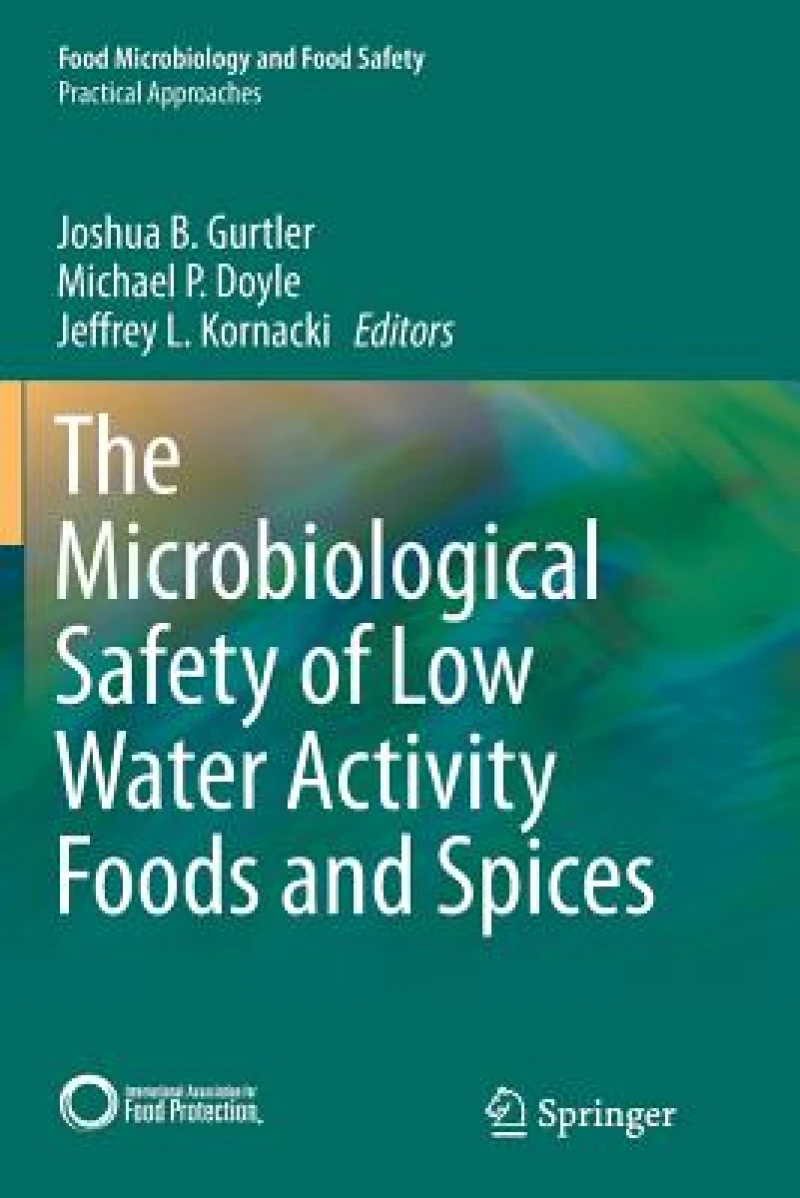
The Microbiological Safety of Low Water Activity Foods and Spices
Click to zoom

Share this book

The Microbiological Safety of Low Water Activity Foods and Spices

Softcover reprint of the original 1st ed. 2014

Book Details

Format Paperback / Softback
ISBN-10 1493952714
ISBN-13 9781493952717
Edition Softcover reprint of the original 1st ed. 2014
Publisher Springer-Verlag New York Inc.
Imprint Springer-Verlag New York Inc.
Country of Manufacture US
Country of Publication GB
Publication Date Sep 22nd, 2016
Print length 444 Pages
Weight 686 grams
Dimensions 15.60 x 23.60 x 3.30 cms
Ksh 16,200.00
Werezi Extended Catalogue Delivery in 28 days

Delivery Location

Delivery fee: Select location

Delivery in 28 days

Secure
Quality
Fast
Low water activity (aw) and dried foods such as dried dairy and meat products, grain-based and dried ready-to-eat cereal products, powdered infant formula, peanut and nut pastes, as well as flours and meals have increasingly been associated with product recalls and foodborne outbreaks due to contamination by pathogens such as Salmonella spp. and enterohemorrhagic E. coli.  In particular, recent foodborne outbreaks and product recalls related to Salmonella-contaminated spices have raised the level of public health concern for spices as agents of foodborne illnesses. Presently, most spices are grown outside the U.S., mainly in 8 countries: India, Indonesia, China, Brazil, Peru, Madagascar, Mexico and Vietnam. Many of these countries are under-developed and spices are harvested and stored with little heed to sanitation. The FDA has regulatory oversight of spices in the United States; however, the agency’s control is largely limited to enforcing regulatory compliance through sampling and testing only after imported foodstuffs have crossed the U.S. border. Unfortunately, statistical sampling plans are inefficient tools for ensuring total food safety. As a result, the development and use of decontamination treatments is key. This book provides an understanding of the microbial challenges to the safety of low aw foods, and a historic backdrop to the paradigm shift now highlighting low aw foods as vehicles for foodborne pathogens.  Up-to-date facts and figures of foodborne illness outbreaks and product recalls are included.  Special attention is given to the uncanny ability of Salmonella to persist under dry conditions in food processing plants and foods.  A section is dedicated specifically to processing plant investigations, providing practical approaches to determining sources of persistent bacterial strains in the industrial food processing environment.  Readers are guided throughdry cleaning, wet cleaning and alternatives to processing plant hygiene and sanitation.  Separate chapters are devoted to low aw food commodities of interest including spices, dried dairy-based products, low aw meat products, dried ready-to-eat cereal products, powdered infant formula, nuts and nut pastes, flours and meals, chocolate and confectionary, dried teas and herbs, and pet foods.  The book provides regulatory testing guidelines and recommendations as well as guidance through methodological and sampling challenges to testing spices and low aw foods for the presence of foodborne pathogens.  Chapters also address decontamination processes for low aw foods, including heat, steam, irradiation, microwave, and alternative energy-based treatments. 

Low water activity (aw) and dried foods such as dried dairy and meat products, grain-based and dried ready-to-eat cereal products, powdered infant formula, peanut and nut pastes, as well as flours and meals have increasingly been associated with product recalls and foodborne outbreaks due to contamination by pathogens such as Salmonella spp. and enterohemorrhagic E. coli. In particular, recent foodborne outbreaks and product recalls related to Salmonella-contaminated spices have raised the level of public health concern for spices as agents of foodborne illnesses. Presently, most spices are grown outside the U.S., mainly in 8 countries: India, Indonesia, China, Brazil, Peru, Madagascar, Mexico and Vietnam. Many of these countries are under-developed and spices are harvested and stored with little heed to sanitation. The FDA has regulatory oversight of spices in the United States; however, the agency''s control is largely limited to enforcing regulatory compliance through sampling and testing only after imported foodstuffs have crossed the U.S. border. Unfortunately, statistical sampling plans are inefficient tools for ensuring total food safety. As a result, the development and use of decontamination treatments is key.

This book provides an understanding of the microbial challenges to the safety of low aw foods, and a historic backdrop to the paradigm shift now highlighting low aw foods as vehicles for foodborne pathogens. Up-to-date facts and figures of foodborne illness outbreaks and product recalls are included. Special attention is given to the uncanny ability of Salmonella to persist under dry conditions in food processing plants and foods. A section is dedicated specifically to processing plant investigations, providing practical approaches to determining sources of persistent bacterial strains in the industrial food processing environment. Readers are guided through dry cleaning, wet cleaning and alternatives to processing plant hygiene and sanitation. Separate chapters are devoted to low aw food commodities of interest including spices, dried dairy-based products, low aw meat products, dried ready-to-eat cereal products, powdered infant formula, nuts and nut pastes, flours and meals, chocolate and confectionary, dried teas and herbs, and pet foods. The book provides regulatory testing guidelines and recommendations as well as guidance through methodological and sampling challenges to testing spices and low aw foods for the presence of foodborne pathogens. Chapters also address decontamination processes for low aw foods, including heat, steam, irradiation, microwave, and alternative energy-based treatments.


Get The Microbiological Safety of Low Water Activity Foods and Spices by at the best price and quality guaranteed only at Werezi Africa's largest book ecommerce store. The book was published by Springer-Verlag New York Inc. and it has pages.


Mind, Body, & Spirit

Price

Ksh 16,200.00

Shopping Cart

Africa largest book store

Sub Total:
Ebooks

Digital Library
Coming Soon

Our digital collection is currently being curated to ensure the best possible reading experience on Werezi. We'll be launching our Ebooks platform shortly.