

Weather Science : How Meteorology Has Gone from Folklore to High-Tech
by
Brian Clegg
Book Details
Format
Paperback / softback
ISBN-10
1837731535
ISBN-13
9781837731534
Publisher
Icon Books
Imprint
Icon Books
Country of Manufacture
GB
Country of Publication
GB
Publication Date
Jul 18th, 2024
Print length
192 Pages
Weight
156 grams
Dimensions
12.80 x 19.80 x 1.50 cms
KSh 2,000.00
Werezi Extended Catalogue
Delivery in 12 days
4 copies in stock
Delivery Location
Delivery fee: Select location
Delivery in 12 days
Secure
Quality
Fast
Everyone has an interest in the weather, whether it''s to check the prospects for a day out or to know when best to harvest a crop. The Earth''s weather systems also provide some of the most dramatic forces of nature, from the vast release of energy in a lightning flash to the devastating impact of tornadoes and hurricanes.For centuries, our only real guide to future weather was folklore, but with the introduction of the first weather forecasts and maps in Victorian times, attempts were made to give some warning of the weather to come. Until relatively recently, these forecasts could be wildly inaccurate - think of Michael Fish''s denial that there was a storm on the way the night before the UK''s great storm of 1987. This was due to the mathematically chaotic nature of weather systems, first discovered in the 1960s, the understanding of which would transform forecasting from the 1990s and mean that meteorologists became some of the foremost users of supercomputers.From the crystalline perfection of the snowflake to the transfer of energy from the Sun, science lies at the heart of the weather and our understanding of it. In recent years, weather science has moved to the leading edge with advanced modelling, versatile use of satellite data and a better understanding of mathematical chaos. This is a true example of hot science at work.
Get Weather Science by Brian Clegg at the best price and quality guaranteed only at Werezi Africa's largest book ecommerce store. The book was published by Icon Books and it has 192 pages.
Customers Who Bought This Also Bought

Dreaming Reality – How Neuroscience and Mysticism Can Unlock the Secrets of Consciousness
KSh 4,500.00

Structures
KSh 2,700.00

Dry-fly Fishing In Theory And Practice
KSh 5,500.00

Character of Physical Law
KSh 2,350.00

Sell Your Research
KSh 5,400.00

Charles Darwin
KSh 7,100.00

Discovering the Desert
KSh 4,150.00

Galileo''s Commandment
KSh 4,850.00

Magnetoresponsive Soft Nanosystems
KSh 39,400.00

A Many-colored Glass
KSh 2,700.00

Fire and Stone
KSh 5,550.00

Arthur Pullinger: an Early Traveler in Syria and Asia Minor
KSh 6,300.00
More by Brian Clegg
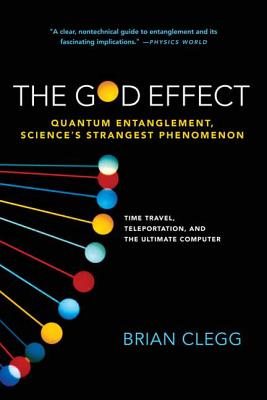
God Effect
KSh 0.00
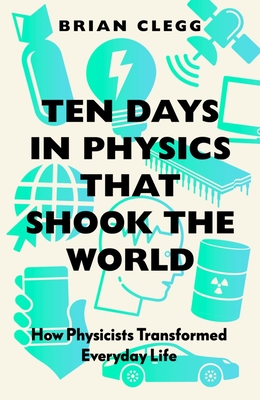
Ten Days in Physics That Shook the World
KSh 2,000.00

Is The Universe Trying to Kill Me?
KSh 3,050.00

The Electron
KSh 3,600.00

Brainjacking
KSh 2,000.00

Interstellar Tours
KSh 3,400.00
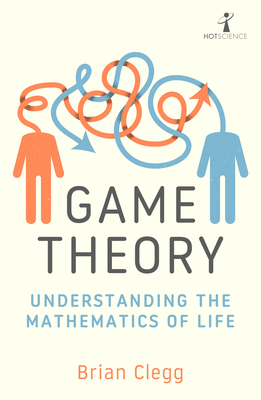
Game Theory
KSh 2,000.00

Lightning Often Strikes Twice
KSh 2,350.00

Brainjacking
KSh 3,600.00
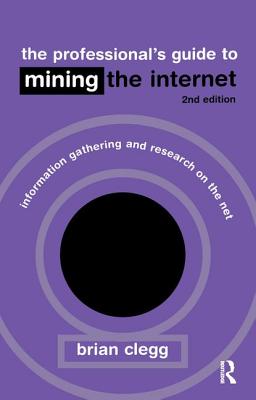
The Professional''s Guide to Mining the Internet
KSh 26,300.00
Introducing Infinity
KSh 1,600.00

Biographic: Tesla
KSh 1,850.00
